Before I started working on my first macramé project, I spent some time learning the different knots that I would need. Here is a guide to the essential knots that will get you started with macramé.
The Lark’s Head
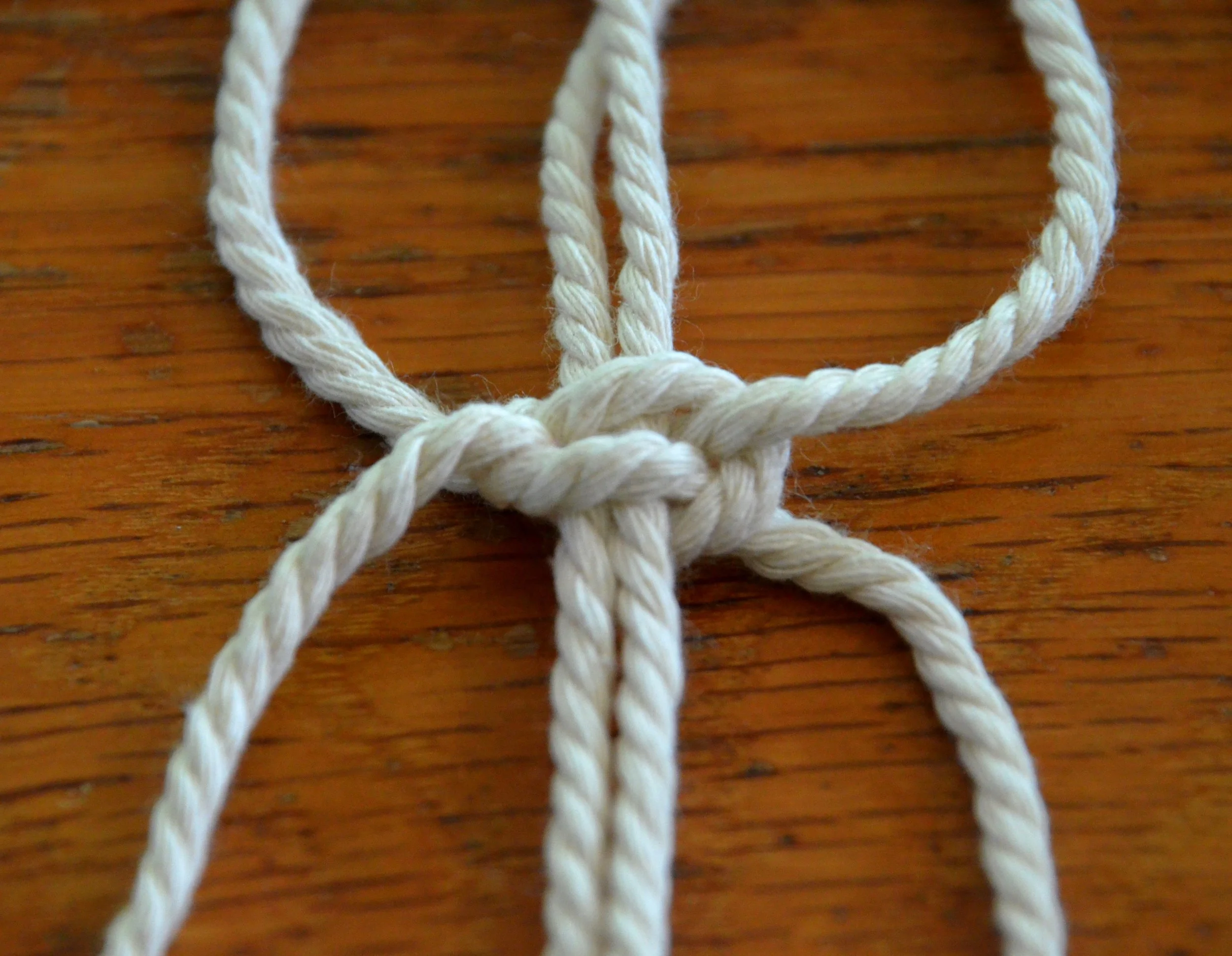
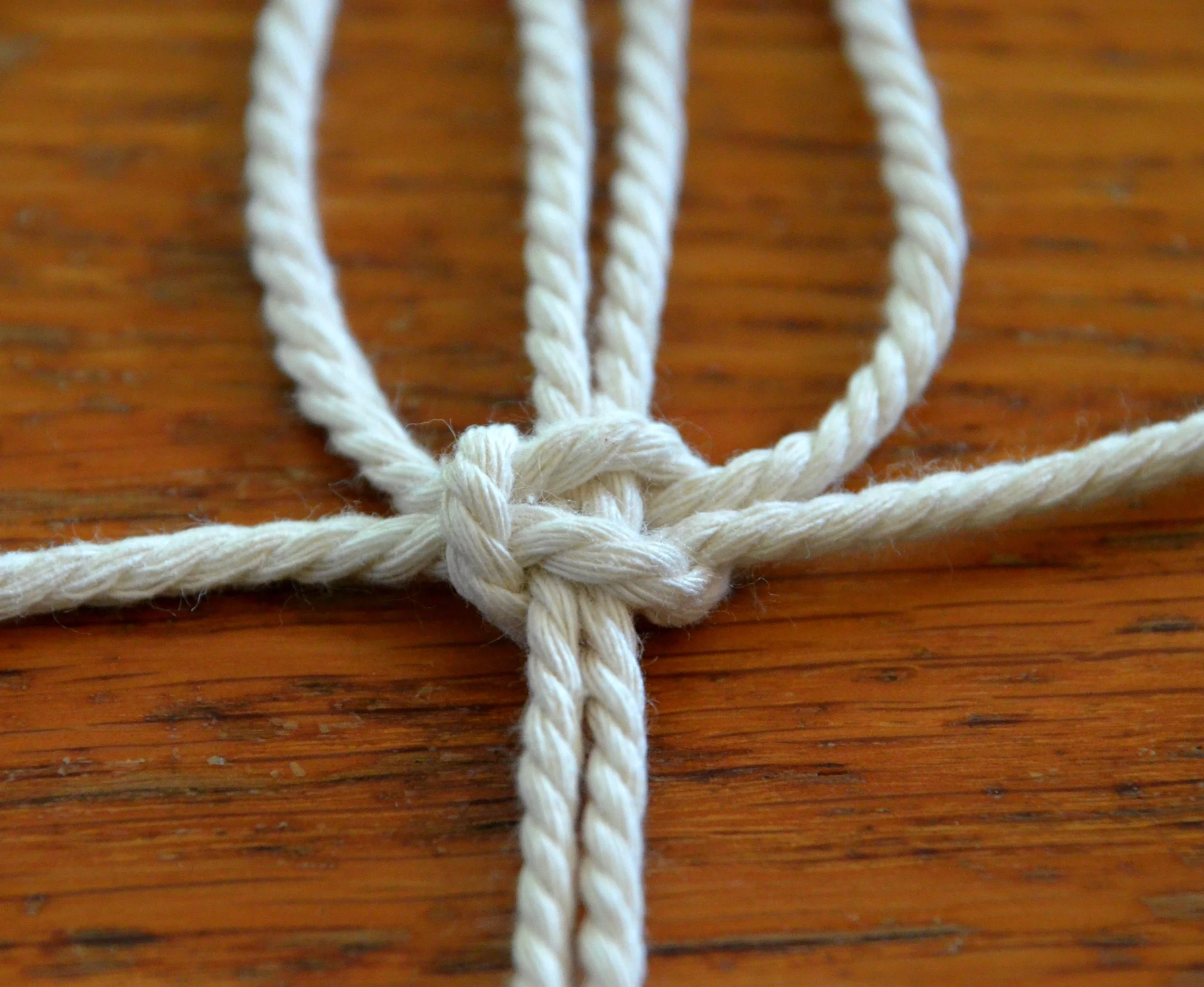
The Lark’s Head is the knot you use to attach your cord to a rod, making it the starting point for most macramé wall hangings. To tie it, fold your cord in half to find the centre. Place the folded loop under the rod so the loop pokes up behind it. Then pull the two loose ends of the cord down through the loop and tighten. Your cord is now secured to the rod with two equal strands hanging down, ready for knotting.
The Double Half Hitch
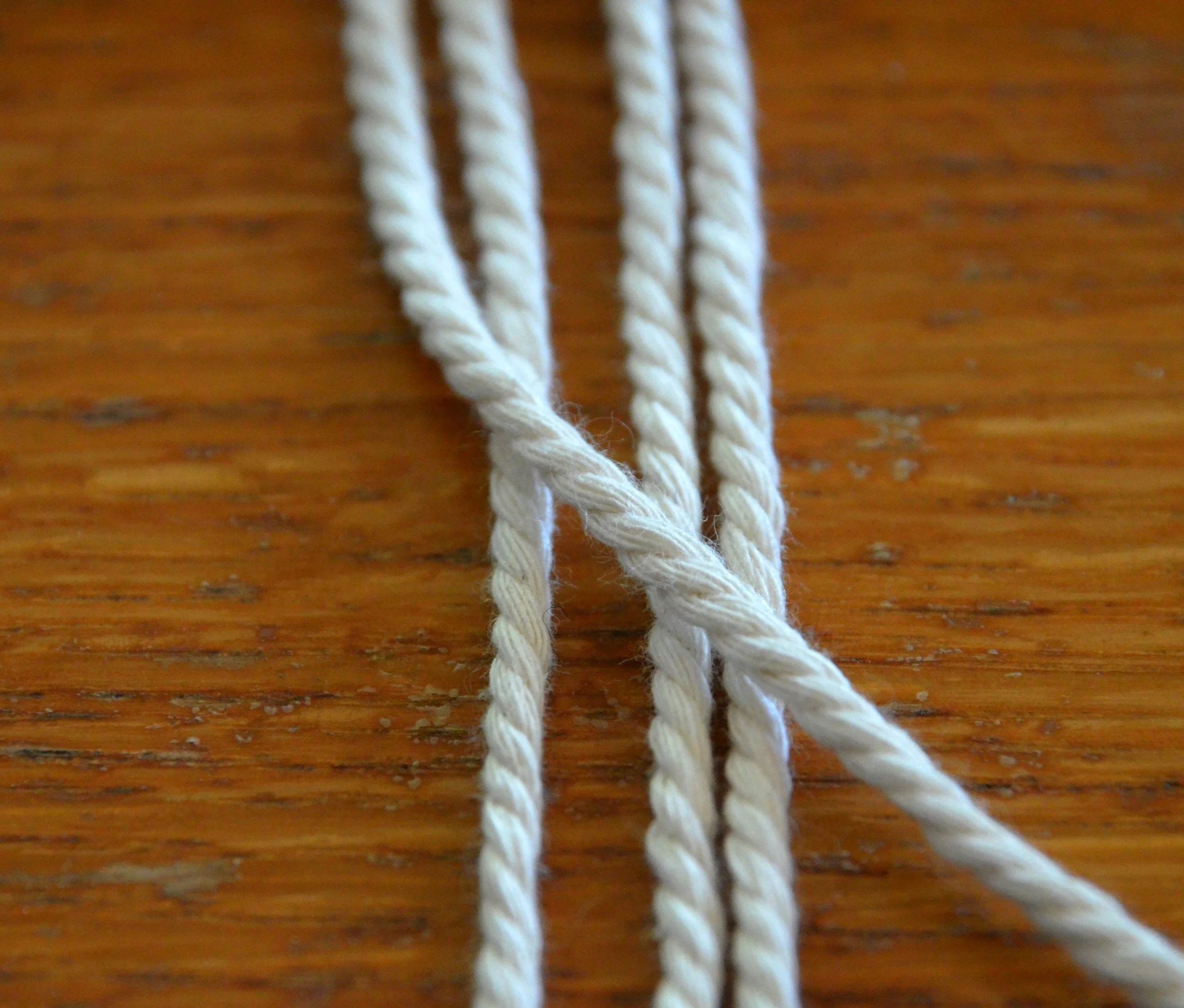
The Double Half Hitch is used to create diagonal petal shapes and angled lines in your macramé work. Start with your cord strands lined up side by side. Take the left strand and pull it diagonally across the other strands — this becomes your guide cord. Then take each subsequent strand and loop it over and under the guide cord twice, pulling tight each time to create a neat row of knots along the diagonal.
The Twisted Sinnet
The Twisted Sinnet creates a beautiful spiralling column of knots. It uses the same half knot repeated in the same direction, which causes the work to naturally twist as you go. Continue this sequence until you reach the length you desire!
The Double Knot
The Double Knot is a variation that follows the initial Twisted Sinnet steps but differs slightly. Instead of repeating the half knot in the same direction each time, you alternate — tying one half knot from the left and then one from the right. This creates a flat, square-shaped knot rather than a twist, and is sometimes called the Square Knot.
The Overhand Knot
The Overhand Knot is the most basic knot in macramé. You likely already know how to tie one — it is the simple knot you use when tying a single loop. In macramé, it is commonly used to gather multiple strands together or to finish off the ends of your work.
The Bead Knot
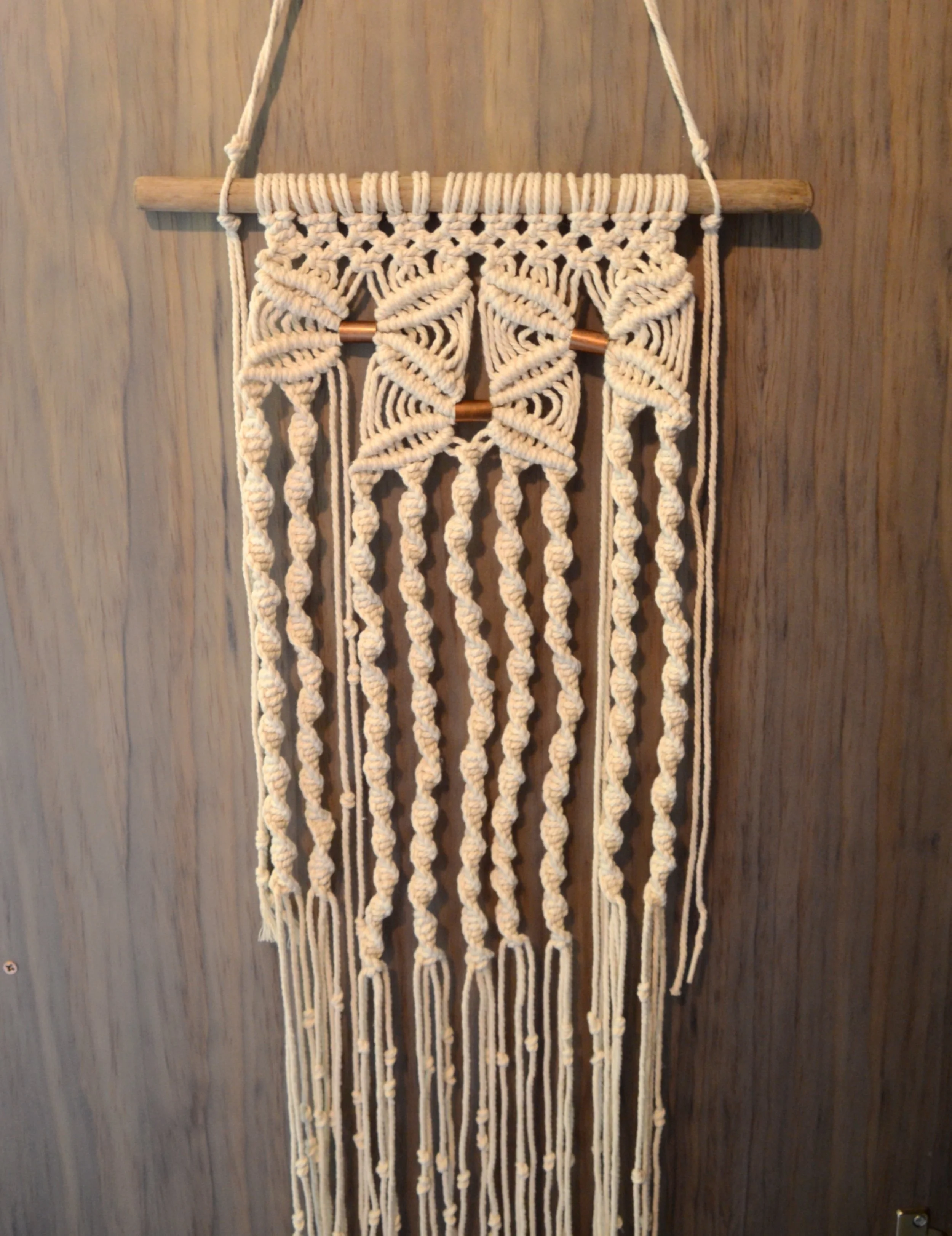
The Bead Knot is the technique for incorporating beads into your macramé work. Thread a bead onto one or more of your strands, then secure it in place using knots above and below the bead. This adds texture and visual interest to your piece, and you can experiment with different bead sizes and materials to create unique designs.